


Platinum Group Metals (PGMs)
Ruthenium in Catalytic Converters: Properties, Uses, and Limitations

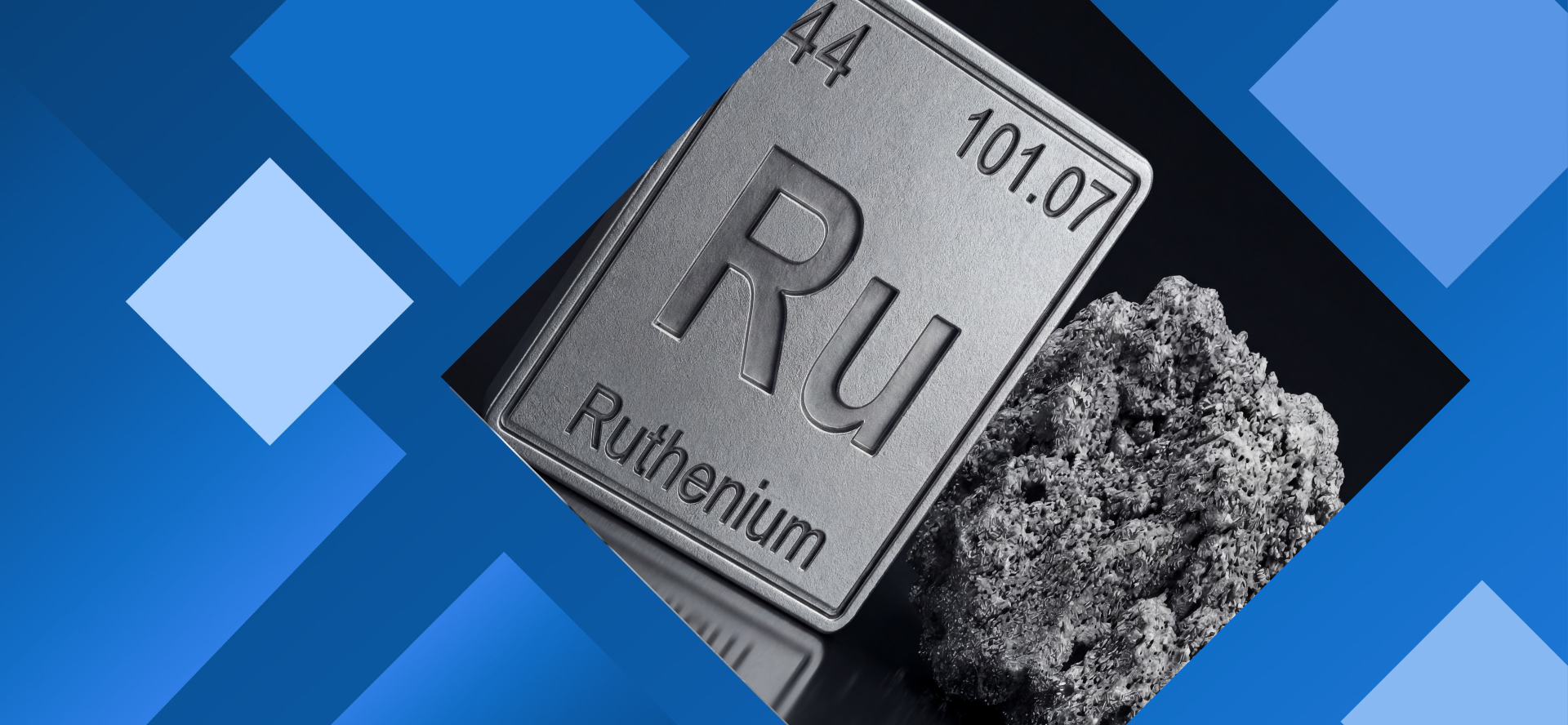
In the world of catalytic converters, three names dominate every pricing sheet, assay report, and recycling conversation: platinum, palladium, and rhodium. These platinum group metals (PGMs) are the backbone of modern automotive emissions systems. They drive oxidation, reduction, and the transformation of toxic exhaust gases into less harmful by-products.
But there’s another platinum group metal that continues to generate curiosity in the recycling and refining industry: ruthenium.
Is ruthenium actually used in catalytic converters? And if not, why is it so frequently discussed alongside other PGMs? How does ruthenium fit into emissions control, hydrogenation, and the broader future of sustainable energy?
These questions are the tip of the iceberg when it comes to ruthenium, and that’s why we’re unpacking this metal’s true role in catalysis. This way, you’ll know everything you need to know about ruthenium’s chemical properties, why its function differs from other PGMs, and what it could mean for the future of emissions technology and recycling.
What is ruthenium?
Ruthenium is a platinum group metal, positioned alongside platinum, palladium, rhodium, iridium, osmium, and platinum itself on the periodic table. Like other PGMs, it’s a noble metal, meaning it resists corrosion and oxidation under normal conditions.
Here are some of ruthenium’s most remarkable characteristics that make this metal ideal for catalysis:
- Harder than platinum
- Highly resistant to chemical attack
- Stable in aggressive chemical environments
- Active in a wide range of chemical reactions
Ruthenium is typically produced as a by-product of platinum and nickel mining. It’s not mined as a primary raw material. That fact alone shapes its availability and price dynamics in global markets.
While it does not command the same headlines as rhodium (often the most expensive precious metal in catalytic converters) ruthenium has carved out a reputation in chemical manufacturing, green chemistry, and hydrogenation systems.
Its strength lies not just in its durability, but in its versatility.
How ruthenium works as a catalyst
To understand ruthenium’s role, we need to revisit how catalysis functions, so let’s take a look inside catalytic converters.
Catalysts speed up chemical reactions without being consumed. In automotive exhaust systems, metal catalysts sit on a ceramic or metallic substrate coated with a washcoat that increases surface area. The larger the surface area, the greater the contact between exhaust gases and active metal sites.
In a traditional three-way catalyst:
- Platinum and palladium drive oxidation reactions
- Rhodium drives reduction reactions
These metals convert:
- Carbon monoxide (CO) into carbon dioxide (CO₂)
- Unburned hydrocarbons into CO₂ and water
- Nitrogen oxides (NOx) into nitrogen and oxygen
These reactions occur in the gas phase, under high-temperature conditions, often exceeding 800°C during heavy engine load.
The performance of these reactions depends on:
- Catalytic activity
- Thermal durability
- Resistance to poisoning
- Reaction kinetics
This is where ruthenium’s story takes a drastic left turn.
Is ruthenium used in catalytic converters?
The short answer: Not in standard automotive catalytic converters.
Modern catalytic converters rely almost exclusively on platinum, palladium, and rhodium. Ruthenium is generally absent from standard light-duty vehicle exhaust systems.
Why ruthenium is rarely used in traditional auto catalysts
There are several reasons why ruthenium didn’t make the cut as a PGM in converters. Let’s take a quick look at some of them.
High-temperature stability challenges
Ruthenium can volatilize under extreme high-temperature exhaust conditions. Automotive converters demand long-term durability under thermal cycling, and rhodium has proven more stable for NOx reduction.
Oxidation state sensitivity
Ruthenium can form volatile oxides at elevated temperatures, which is problematic in aggressive exhaust environments, such as the converter.
Established supply chains
OEMs prioritize proven materials. Platinum, palladium, and rhodium have decades of field data supporting their catalytic performance.
Sulfur sensitivity
Ruthenium catalysts can be more susceptible to poisoning in certain fuel conditions.
Where Ruthenium Has Been Tested
Ruthenium may not have been the star of automotive catalysts, but it has been studied in various other catalytic systems.
Ruthenium-based catalysts have been studied in:
- Diesel oxidation systems
- Low-temperature oxidation reactions
- Laboratory emission-control prototypes
- Ammonia and hydrogen cleanup systems
But in commercial automotive converters, ruthenium has not replaced rhodium or palladium.
For recyclers, this means ruthenium is typically not present in scrap catalytic converters.
Why ruthenium’s role differs from other PGMs
Ruthenium and other PGMs are like siblings; there are more differences than there are similarities. For ruthenium, the difference comes down to the reaction environment.
Platinum and palladium are best suited for high-temperature oxidation, gas phase reactions, and hydrocarbon & carbon monoxide conversion.
On the other hand, rhodium is equipped for Nox reduction, oxygen-deficient conditions, and high-temperature reduction chemistry.
Ruthenium, however, handles hydrogenation, liquid-phase reactions, water-based systems, and carbonyl compound transformation. Ruthenium’s catalytic activity excels in environments involving solvents, liquid reactants, moderate temperatures, and controlled reaction kinetics. In other words, it shines in chemical reactors, not tailpipes.
How does ruthenium help in hydrogenation?
Now that we understand how ruthenium differs from the other PGMs, let’s get into its functions—namely, hydrogenation.
Hydrogenation is a chemical reaction that adds hydrogen to unsaturated compounds. It’s central to:
- Pharmaceutical manufacturing
- Biofuel upgrading
- Synthetic fuel production
- Green chemistry
Ruthenium catalysts are especially effective at activating hydrogen molecules. They adsorb hydrogen onto their surface, split it into atomic hydrogen, and facilitate transfer to target molecules.
Compared to palladium, ruthenium often shows higher selectivity, performs better under lower pressures, and operates efficiently in aqueous systems. That’s why it has an advantage in renewable energy processes!
This makes ruthenium-based catalysts valuable in converting carbonyl compounds, biomass-derived intermediates, and ethanol & methanol derivatives.
Why is ruthenium efficient in aqueous-phase hydrogenation?
In sustainable energy research, aqueous-phase hydrogenation is critical for upgrading biosourced molecules derived from plant material.
Biosourced carbonyl compounds are oxygen-rich molecules extracted from biomass. They require selective hydrogenation to become stable fuels or chemical intermediates.
Ruthenium performs well here because:
- It resists corrosion in water
- It maintains catalytic activity in polar solvents
- It supports controlled reaction kinetics
- It offers high-performance selectivity
Under low-temperature aqueous conditions, ruthenium catalysts outperform many oxide catalysts and even some other noble metal systems.
This makes ruthenium central to various important systems we rely on everyday, such as sustainable energy, biomass-to-fuel conversion, ethanol and methanol reforming, and hydrogen production.
In green chemistry, ruthenium helps reduce unwanted by-products and increases overall catalytic performance.
Could ruthenium improve the efficiency of catalytic converters in the future?
That’s the big question for ruthenium fans. Research does suggest possible niche roles involving catalytic converters, but they’re nowhere near ready for mass public use. Let’s take a look at what that means.
Low-temperature emissions
One of the biggest emissions challenges today is cold-start performance. During the first 30–60 seconds of engine operation, converters are not yet hot enough for full catalytic activity.
Ruthenium’s low-temperature catalytic behavior has sparked interest in:
- Hybrid vehicle exhaust systems
- Plug-in hybrid emissions management
- Auxiliary oxidation layers
Blends of ruthenium with platinum group metals are being studied to:
- Improve cold-start oxidation reactions
- Reduce reliance on rhodium
- Enhance surface reactivity
However, because ruthenium does its magic under lower temperatures, thermal durability remains a hurdle.
What’s the most expensive metal in a catalytic converter, and why is ruthenium not the answer?
That title typically belongs to rhodium.
Rhodium’s role in NOx reduction makes it indispensable. Limited supply and growing emissions regulations have pushed its price to historic highs.
Platinum and palladium also contribute significantly to converter value, but ruthenium is not currently a price driver in automotive recycling.
However, as sustainable energy systems expand, demand for ruthenium in fuel cells, hydrogen production, and renewable energy processes may grow—just not in today’s scrap catalytic converters.
Why ruthenium matters to the recycling industry, even if it’s not in converters
Even if ruthenium is not in today’s catalytic converters, recyclers should pay attention.
Why?
- Catalyst chemistry evolves every day. Ruthenium might not be part of the catalytic converter precious metal trio today, but one day it might be.
- Sustainable energy systems are expanding.
- Green chemistry is driving new metal demand.
- Hydrogenation technologies are scaling.
Industrial catalysts containing ruthenium are already being refined and recycled in specialized sectors. As renewable energy and sustainable energy infrastructure grows, so will the importance of diverse platinum group metal recovery.
Understanding ruthenium today prepares you for tomorrow’s markets!
What this means for buyers, sellers, and refiners
For today’s buyers, sellers, and refiners in the catalytic converters and recycling space, the reality is straightforward: you will not find meaningful quantities of ruthenium in standard automotive scrap.
Modern converter formulations are still dominated by palladium for oxidation, rhodium for NOx reduction, and platinum in select gasoline and diesel systems. Ruthenium is not part of mainstream three-way catalyst chemistry, which means it doesn’t contribute to assay results or settlement values in typical converter lots.
However, assuming that this will always be the case would be short-sighted.
Catalyst technology evolves in response to regulatory pressure, raw material constraints, and price volatility. When rhodium prices spike or supply tightens, manufacturers actively explore alternative metal catalysts and modified platinum group metal blends. Ruthenium-based catalysts have already been studied for low-temperature oxidation reactions, hydrogen-assisted systems, and hybrid vehicle emissions strategies.
As emissions standards become stricter and cold-start performance becomes even more critical, research into diversified PGM formulations could move from laboratory-scale to commercial deployment within the next decade.
For refiners and large-volume buyers, this possibility matters. Market diversification is one of the strongest tools for margin protection. Companies that understand not only platinum, palladium, and rhodium, but also emerging precious metal chemistries, are better positioned to adapt if converter formulations shift.
If ruthenium or other noble metals begin appearing in future substrates, early awareness will translate into faster assay adjustments, more accurate pricing models, and stronger negotiating leverage.
Ruthenium is not in your converters — but it is in the future
Ruthenium is a powerful platinum group metal with impressive catalytic activity. It excels in hydrogenation, aqueous-phase reactions, and sustainable chemical systems. However, it’s not currently a core component of standard automotive catalytic converters.
Its strengths lie in:
- Liquid-phase chemistry
- Low-temperature catalytic performance
- Green chemistry
- Fuel cells
- Renewable energy
However, in an industry where catalytic performance, sustainability targets, and metal supply chains are constantly evolving, knowledge is a competitive advantage. Understanding ruthenium today (even if it isn’t in your current scrap stream) ensures you’re prepared for the next phase of emissions technology and recycling economics.
Stay informed about platinum, palladium, rhodium, iridium, and emerging ruthenium-based catalysts shaping the future of emissions systems, recycling markets, and sustainable energy technologies. Contact one of our experts today!