Catalytic Converter Price
Why are Catalytic Converters Valuable, and What Metals Do They Contain?


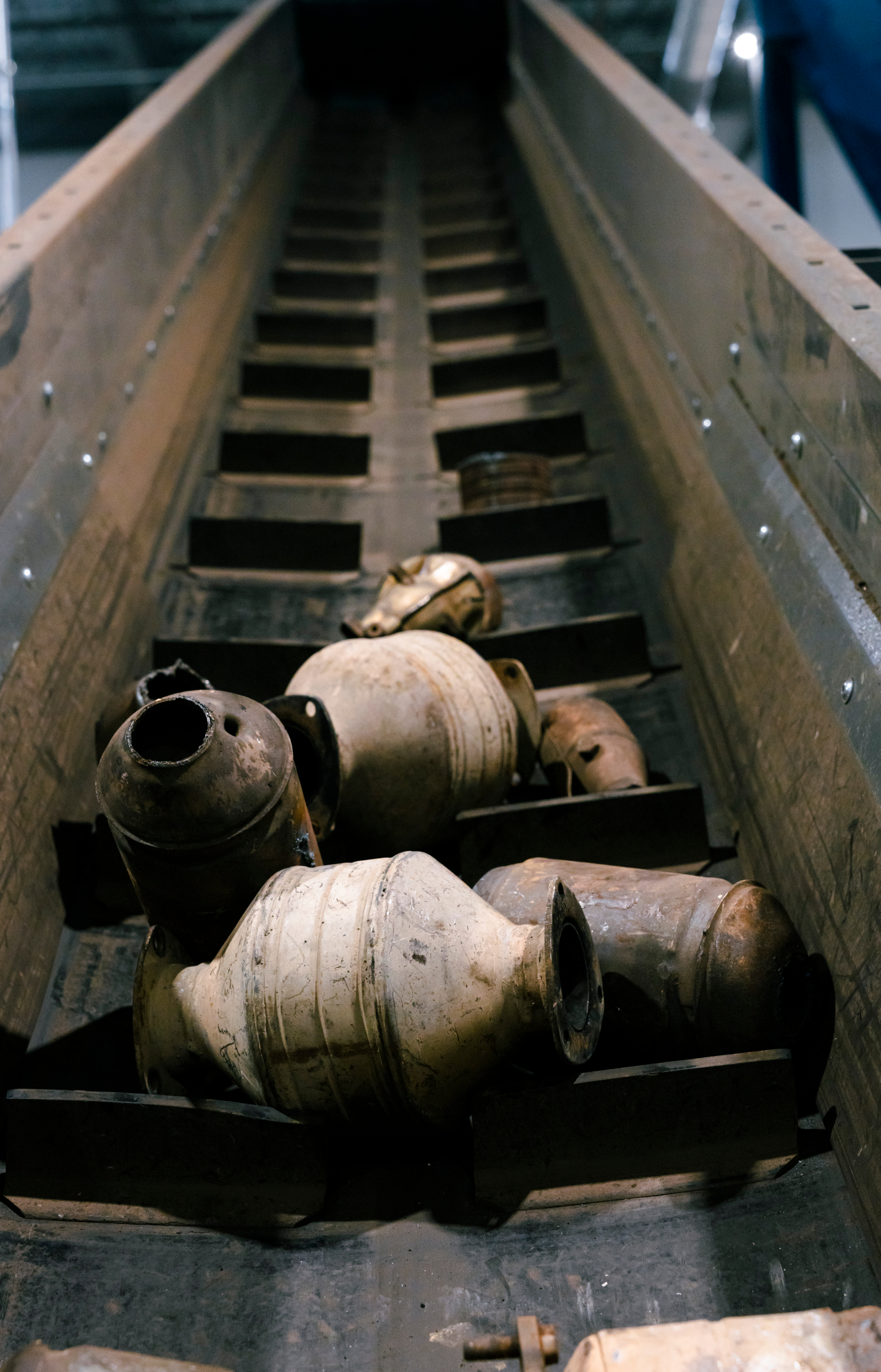
Recycled catalytic converters are among some of the most valuable scrap metal. That’s because they contain three precious metals: platinum, palladium, and rhodium. These Platinum Group Metals (PGMs) contain similar chemical and physical properties, making them valuable assets to various global industries.
This is why scrap yards, automotive recyclers, core buyers, and smelters buy and sell used auto catalysts. But how is the value of catalytic converters determined? What role does the metal market play? And how does someone selling converters actually get paid for the precious metal content?
We’re giving you a behind-the-scenes tour at catalytic converter recycling, diving into the details of pricing, market volatility, and payment.
Why do we use catalytic converters?
In the early 1970s, governments across North America and Europe began rolling out strict emission regulations. Decades of unregulated vehicle emissions had led to smog-filled cities, rising respiratory illness rates, and major environmental concerns. To combat exhaust gases, authorities mandated that automobile manufacturers reduce pollutants coming from a vehicle’s exhaust system.
This is when the catalytic converter was born.
A catalytic converter uses chemical reactions, driven by platinum, palladium, and rhodium, to convert harmful emissions into less harmful substances. These reactions typically transform:
- Carbon monoxide (CO) → carbon dioxide (CO₂)
- Hydrocarbons (HCs) → carbon dioxide (CO₂) + water (H₂O)
- Nitrogen oxides (NOx) → nitrogen (N₂) + oxygen (O₂)
These reactions take place inside the converter’s ceramic wash coat, where tiny particles of PGMs act as the catalyst.
Because this technology drastically reduced emissions, catalytic converters became mandatory, and they remain one of the most important pollution-control devices ever created. Today, the auto industry still represents the largest consumer of PGMs worldwide, especially rhodium, which has very few alternative uses.
Why are PGMs valuable?
Platinum Group Metals contain Platinum, Palladium, Rhodium, Ruthenium, Osmium, and Iridium. While only the first three are used in automotive catalysts, all six share extraordinary stability, catalytic efficiency, and resistance to chemical corrosion, and are all in high demand. These qualities make them indispensable in industries such as:
- Automotive
- Medical devices and dental tools
- Electronics and battery technology
- Chemical processing
- Petroleum refining
- Jewelry manufacturing
Because they’re both rare and essential, PGMs command high prices.
The market value of a catalytic converter is determined by the recoverable weight of platinum, palladium, and rhodium inside its core. Once the scrap is processed, the refined metal is returned to the global market to be reused in new products.
In other words, when you recycle used catalytic converters, you’re returning valuable metals to the industries that need them. You’re contributing to a circular economy and ensuring that limited natural resources are used as efficiently as possible.
But which metals matter most for converter pricing? And why?
Platinum & Palladium
Platinum and palladium are the workhorses of the PGM world. Their demand comes from far more than automotive catalysts. They are widely used in:
- Surgical tools
- Laboratory instruments
- Electrical contacts
- Investment bullion
- Jewelry fabrication
- Hydrogen fuel cell technology
Because these markets are diverse, platinum and palladium prices shift constantly in response to supply and demand. Production interruptions in mining countries (such as South Africa or Russia), fluctuations in jewelry demand, or shifts in automotive manufacturing standards can all influence their prices.
In catalytic converters, these two metals make up the bulk of the total PGM concentration. Their relatively larger quantities mean supply is steadier and price fluctuations are more predictable than rhodium’s.
Platinum and palladium often trade places in value depending on:
- Automotive adoption (gasoline vs. diesel engines)
- Substitution trends
- Emission standards
- Jewelry industry trends
Since they represent most of the total weight in a converter, they form the foundation of its overall value.
Rhodium
Rhodium is the outlier and often the wild card in converter pricing.
Over 80% of all rhodium produced is used in the automotive industry, specifically to reduce nitrogen oxide (NOx) emissions. The remaining fraction supports chemical catalysts and fossil-fuel emission reduction systems.
Two additional factors make rhodium especially valuable:
- Extreme rarity: Rhodium is one of Earth’s rarest metals. Annual global production is a fraction of platinum or palladium output.
- Lack of an open exchange: Unlike gold, silver, or even platinum, rhodium is not bought or sold on open exchanges. Its price is determined through direct negotiations between producers and buyers. That means price swings can be sharper, more rapid, and less predictable.
During periods of strict emission regulation, automotive demand for rhodium increases, pushing prices even higher. Since its availability is limited and the market is small, rhodium is often the single largest contributor to the value of a converter, even though it’s present in the smallest amounts.
Global factors that affect precious metal market prices
We briefly touched on the factors that affect the PGM market. Now, let’s dive deeper into what affects the prices of your metals, and why.
Mining supply disruptions
Most PGMs are mined in just a few countries, primarily South Africa and Russia. Any disruption in these regions, such as strikes, political instability, power shortages, or logistical issues, can instantly impact global supply.
Automotive production trends
Since converters consume the majority of PGM demand, anything affecting car production affects metal prices. Examples include:
- Changes in emissions legislation
- Shifts toward hybrid or EVs
- Increased production of large trucks or SUVs (which require larger catalyst loads)
If automakers build more vehicles, the demand for PGMs rises and so does the price.
Technological developments
Catalyst manufacturers may alter loading ratios (for example, favoring palladium over platinum), which changes demand. Emerging technologies like hydrogen fuel cells or new refinery catalysts also influence long-term PGM demand.
Economic uncertainty and investor behavior
Investors often use precious metals as a hedge against inflation or currency instability. When markets are turbulent, investment demand for PGMs can spike, especially for platinum and palladium.
Regulatory changes
Stricter emission standards require higher catalyst loading, which increases PGM demand. Conversely, when regulations relax or markets shift toward electric vehicles, demand may slow.
All these factors contribute to the short-term volatility and long-term price direction for platinum, palladium, and rhodium.
How to stay competitive in a volatile PGM market?
Because catalytic converters contain all three major PGMs, the value of any converter fluctuates with the market. These changes are a reflection of:
- Supply
- Demand
- Industrial consumption
- Global speculation
- Geopolitics
In a market this dynamic, staying competitive means staying informed.
At PMR, we publish live platinum, palladium, and rhodium market prices, updated every minute, directly on our website. This helps you make informed choices, track value fluctuations, and ensure you’re always working with the most accurate and up-to-date pricing information.
Visibility is the key to maximizing converter returns. Markets move fast, and the more real-time data you have, the better decisions you make when buying, selling, or holding scrap units.
Did you enjoy this article? Visit PMR’s Resource Center to learn more.