


Catalytic converter 101
Oxidation vs Three-Way Converters: What’s the Difference?

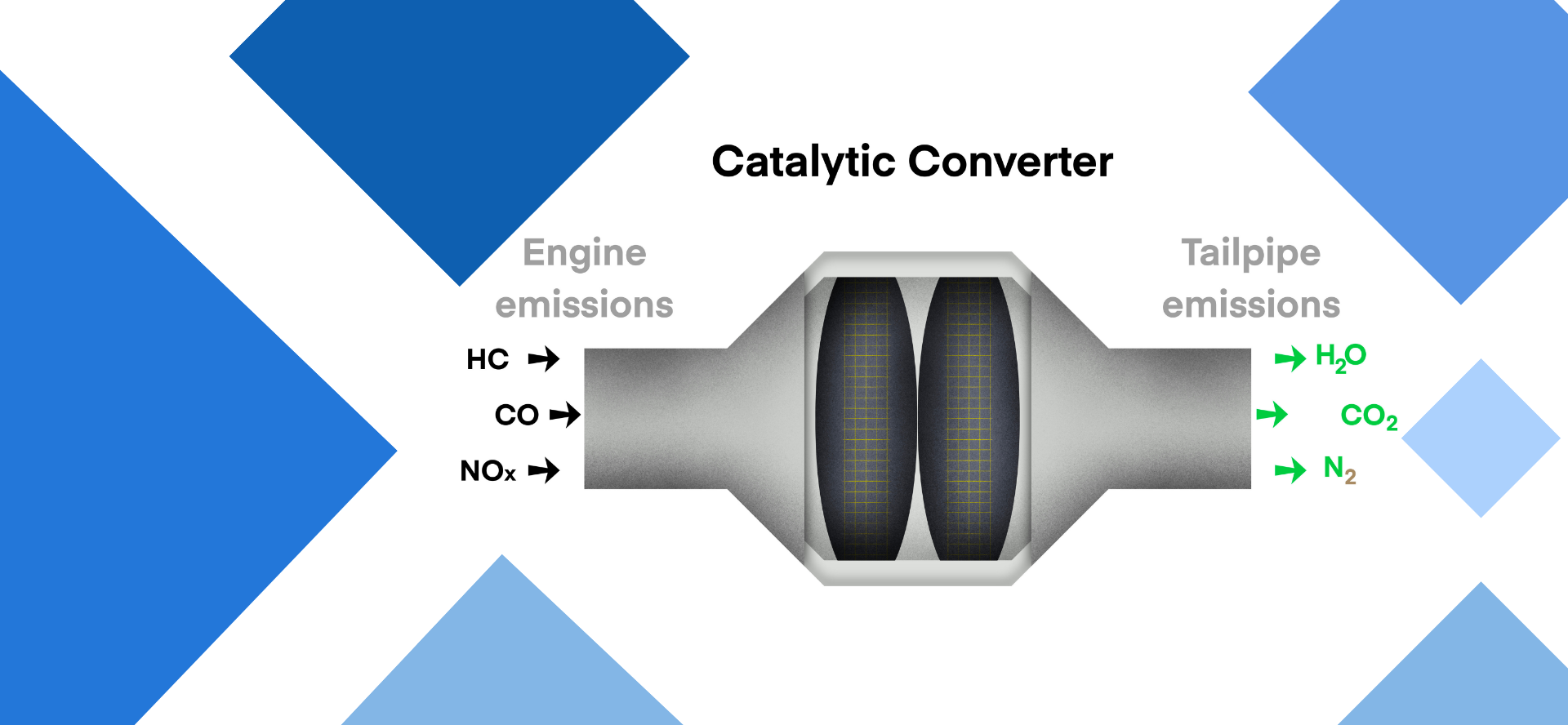
Emissions control technology has evolved since the 1970s. As automotive engines became more efficient and environmental regulations tightened, catalytic converter design shifted from simple oxidation systems to highly engineered three-way catalytic converters capable of managing multiple pollutants simultaneously.
Despite these advances, a wide range of converter types remain in circulation today, from early oxidation converters still found in legacy vehicles and diesel engines to modern three-way systems dominating gasoline-powered fleets.
For recyclers, buyers, and dismantlers, understanding the differences between oxidation and three-way converters is critical. The underlying chemistry directly influences precious metal loading, substrate construction, oxygen storage capacity, and ultimately, the recoverable value of each catalytic converter. Two units that appear identical on the outside can differ significantly in platinum, palladium, and rhodium content once processed.
We’re breaking down the functional and chemical distinctions between oxidation and three-way converters, explaining the most common converter types encountered in recycling streams, and taking a detailed look inside the catalytic converter itself. By understanding how emissions chemistry, fuel ratio, and operating conditions shape converter design, you’ll be empowered to make more informed buying, grading, and processing choices.
What are catalytic converters designed to do?
At their core, catalytic converters are designed to reduce harmful vehicle emissions before they exit the tailpipe. Internal combustion engines, whether gasoline engines or diesel engines, produce a mixture of pollutants as a result of fuel combustion inside the engine exhaust.
The primary pollutants targeted by catalytic converters include:
- Carbon monoxide (CO), a toxic gas produced by incomplete combustion
- Hydrocarbons (HC), or unburned fuel molecules
- Nitrogen oxides (NOx), formed at high combustion temperatures
These pollutants contribute directly to air pollution and smog formation and are strictly regulated by emission standards worldwide.
Catalytic converters rely on catalysis, using precious metals to accelerate chemical reactions without being consumed themselves. Two fundamental reaction types occur inside the exhaust system:
- Oxidation reactions, which convert carbon monoxide and hydrocarbons into carbon dioxide and water vapor
- Reduction reactions, which convert nitrogen oxides into nitrogen and oxygen
Platinum, palladium, and rhodium act as the active catalyst metals that enable these reactions to occur efficiently at automotive exhaust temperatures. But not all converters perform both oxidation and reduction. The need to control different pollutants under different operating conditions is precisely why multiple converter designs emerged over time.
Converter evolution: from early oxidation units to modern systems
Early emission control systems focused almost exclusively on oxidation. In the mid-1970s, oxidation converters were introduced to reduce carbon monoxide and hydrocarbons in gasoline vehicle emissions. These early systems operated in oxygen-rich exhaust gas environments and relied on relatively simple oxidation chemistry.
As emission standards tightened in the late 1970s and early 1980s, regulators began targeting nitrogen oxides more aggressively. This shift required a new type of aftertreatment technology capable of performing both oxidation and reduction reactions. The result was the three-way catalytic converter, which could simultaneously control CO, HC, and NOx—provided the engine maintained a tightly controlled fuel ratio.
Over time, converter systems became more complex and more integrated with engine controls. Modern designs include:
- Close-coupled converters, positioned near the engine for rapid light-off during a cold start
- Under-floor converters, used for secondary treatment and thermal durability
- Dual-bed and two-stage systems, combining multiple catalyst layers
- Diesel aftertreatment systems, including diesel oxidation catalysts (DOC), diesel particulate filters (DPF), and selective catalytic reduction (SCR)
Despite these advancements, oxidation converters remain relevant today, particularly in diesel exhaust applications and heavy-duty automotive and industrial engines.
What is inside a catalytic converter? A detailed breakdown
Although catalytic converters may look similar externally, their internal construction varies significantly depending on their function and intended operating conditions. Let’s meet the converter components that are vital to its role.
The Shell
The outer shell is a stainless steel canister designed to withstand high temperatures, vibration, and environmental exposure. While the shell itself has limited value, recyclers process it separately as stainless scrap once the converter is decanned.
Shell size alone is not a reliable indicator of value. Two converters with identical shells can contain different substrates and precious metal loadings.
The Substrate
Inside the shell sits the substrate, typically formed in a honeycomb structure to maximize surface area while minimizing exhaust restriction.
Common substrate materials include:
- Ceramic substrates, usually cordierite, valued for thermal stability
- Metallic substrates, made from stainless steel foil, offering higher durability and faster heat transfer
Cell density (measured in cells per square inch) plays a major role in catalytic performance. Higher cell density generally supports higher PGM loading and improved reaction efficiency, but it also affects exhaust flow and operating temperature.
The Washcoat
The washcoat is a porous aluminum oxide layer applied to the substrate. Its purpose is to increase surface area and serve as the carrier for catalyst metals.
Embedded within the washcoat are oxygen storage materials, primarily ceria (CeO₂) and cerium-based compounds often blended with zirconia. Oxygen storage capacity is critical to converter performance, particularly in three-way catalytic converters, where exhaust conditions constantly fluctuate between rich and lean fuel ratios.
The Catalyst Metals
The active precious metals are platinum, palladium, and rhodium. They’re dispersed throughout the washcoat.
- Platinum and palladium primarily drive oxidation reactions
- Rhodium is essential for NOx reduction
Rhodium is often concentrated deeper within the substrate to protect it from thermal shock and catalyst poisoning. This distribution has direct implications for milling depth and assay accuracy during recycling.
Heat shields, gaskets & interlocking mats
Interlocking mats and insulation materials hold the substrate in place and accommodate thermal expansion. These materials ensure structural stability but complicate decanning and milling operations if not properly managed.
How the internal build affects recycling value
Substrate mass, washcoat thickness, precious metal loading, and aging all influence recoverable value. Thermal degradation, contamination, and long-term exposure to engine exhaust can reduce catalytic efficiency but do not eliminate precious metals, making proper identification and grading critical.
Oxidation converters vs. three-way converters: functional differences
Now that we’ve established the basics, let’s take a deeper dive into the functional differences between two-way converters and three-way converters.
Oxidation converters (two-way converters)
Oxidation converters were widely used in gasoline engines from the mid-1970s through the early 1980s and remain common in diesel engines today.
Their function is limited to oxidation reactions:
- Carbon monoxide → carbon dioxide
- Unburned hydrocarbons → carbon dioxide + water vapor
Because oxidation converters operate in oxygen-rich exhaust gas environments, they cannot reduce nitrogen oxides. NOx reduction requires a controlled, near-stoichiometric fuel ratio, which oxidation converters are not designed to support.
Typical oxidation converters rely heavily on platinum and palladium and contain little to no rhodium. Structurally, they feature washcoats optimized for oxidation reactions and thermal durability.
Three-way converters (TWC)
Three-way catalytic converters are named for their ability to perform three reactions at once:
- Oxidize carbon monoxide
- Oxidize hydrocarbons
- Reduce NOx to nitrogen
This is made possible by precise control of the fuel ratio near stoichiometric conditions, managed by oxygen sensors and engine control units.
Rhodium plays a crucial role in NOx reduction, making TWCs significantly more valuable from a recycling standpoint. Precious metal loading patterns differ from oxidation units, with more complex distribution across the substrate.
Side-by-side comparison: why the chemistry matters to recyclers
The presence or absence of rhodium is often the single largest driver of value differences. Mixed lots containing both oxidation converters and TWCs can yield unpredictable assay results if not properly sorted, leading to inaccurate pricing and settlement discrepancies.
What does a 3-way converter do?
For non-technical audiences, a three-way converter can be described as a chemical reactor within the exhaust system. As hot exhaust gas flows through the substrate, three reactions occur simultaneously once the converter reaches its light-off temperature.
Oxygen sensors continuously monitor exhaust composition and adjust the fuel ratio to maintain optimal operating conditions. This delicate balance allows oxidation and reduction reactions to coexist—something oxidation-only converters cannot achieve.
Three-way converters dominate modern gasoline vehicle emissions control because they offer comprehensive pollutant reduction while meeting increasingly strict emission standards.
The three types of catalytic converters found in recycling streams today
Let’s take a dive into the most commonly seen catalytic converters on the recycling conveyor belts!
Two-way (oxidation) converters
Still common in heavy-duty diesel applications and older gasoline vehicles. Often encountered as diesel oxidation catalysts (DOC) in modern diesel exhaust systems.
Three-way converters
Used in most gasoline vehicles since the mid-1980s. These are the most common converters found in scrap streams today and typically contain the highest rhodium loadings.
Three-way + air (TWC + A)
Transitional designs from the early 1980s that use injected air to assist oxidation. These units often confuse recyclers and are frequently misclassified, despite having PGM patterns distinct from standard TWCs.
Extended configurations include dual-bed converters, manifold cats, DOC + DPF combinations, and SCR-equipped systems found in diesel aftertreatment assemblies.
Oxidation vs. reduction: the core chemical differences
The fundamental distinction between oxidation and three-way converters lies in redox chemistry.
The Three Main Differences
- Electron Transfer: Oxidation involves loss of electrons; reduction involves gain of electrons.
- Chemical Output: Oxidation produces carbon dioxide and water; reduction converts nitrogen oxides into nitrogen and oxygen.
- Catalyst Requirements: Platinum and palladium drive oxidation, while rhodium is essential for reduction.
Why reduction is only possible in three-way converters
NOx reduction requires a carefully controlled oxygen environment. Excess oxygen inhibits reduction reactions, which is why oxidation converters, designed for oxygen-rich exhaust, cannot perform NOx reduction.
Impact on PGM loading & scrap value
Rhodium’s scarcity and price volatility make TWCs particularly valuable. Missing or misidentifying high-rhodium converters can significantly impact profitability in mixed loads.
The three types of oxidation chemistry inside a catalytic converter
- Thermal Oxidation: Heat-driven reactions occurring at high exhaust temperatures.
- Catalytic Oxidation: Surface reactions enabled by precious metals at lower activation energies.
- Chemical Oxidation via Oxygen Storage: Ceria-based oxygen storage materials buffer oxygen availability, stabilizing reaction efficiency during changing operating conditions.
All three oxidation mechanisms coexist inside both oxidation converters and three-way catalytic converters.
How these differences affect scrap buying, grading & processing
Beyond basic identification, understanding the functional differences between oxidation converters and three-way catalytic converters directly affects how scrap material should be bought, sorted, and processed. In mixed automotive loads, converters often arrive without clear vehicle context, making chemistry-based knowledge essential for accurate evaluation. Relying solely on shell size, weight, or visual similarity increases the risk of underpaying for high-rhodium units or overpaying for oxidation-only material.
Most common errors
One of the most common grading errors occurs when oxidation converters are grouped with gasoline three-way converters, particularly diesel oxidation catalysts (DOC). While both may contain platinum and palladium, DOC units are engineered for oxygen-rich diesel exhaust and lack meaningful NOx reduction capability. As a result, their rhodium content is minimal or nonexistent. When these converters are misclassified, assay results often come back lower than expected, creating discrepancies between estimated and actual recoverable value.
Sorting matters!
Proper sorting also plays a critical role in milling and sampling accuracy. Three-way converters typically feature more complex washcoat structures and deeper precious metal distribution, especially for rhodium. If oxidation converters and TWCs are milled together, dilution effects can skew assay data, making it difficult to accurately model PGM recovery. Separating material by converter type improves sample homogeneity and reduces variability in assay-based returns.
Efficiently managing your inventory
Inventory management practices further benefit from chemistry-aware grading. Assigning converters to clearly defined categories (oxidation, TWC, TWC + air, DOC, or multi-component diesel aftertreatment) helps recyclers track yield performance over time. This data becomes especially valuable when precious metal markets fluctuate, as it allows buyers to adjust pricing models based on actual recovery trends rather than spot assumptions.
OEM identification and serial number matching remain essential tools, but they are most effective when combined with an understanding of converter function. Databases can confirm original applications, yet visual confirmation of substrate type, converter placement in the exhaust system, and known emission control strategies adds another layer of confidence. This hybrid approach minimizes costly misclassification, particularly in high-volume or mixed automotive scrap streams.
Ultimately, recyclers who understand how oxidation chemistry, oxygen storage behavior, and NOx reduction capability influence precious metal loading are better equipped to protect margins. As rhodium prices remain volatile and emission control systems continue to evolve, chemistry-driven grading is no longer optional—it is a competitive necessity in modern catalytic converter recycling.
Catalytic converters may look similar from the outside, but their chemistry, function, and internal design determine their true recoverable value. Oxidation converters and three-way catalytic converters differ fundamentally in how they manage emissions, which directly impacts precious metal content.
For recyclers, understanding these distinctions provides a competitive edge, improving buying accuracy, processing efficiency, and overall profitability.
Handling multiple converter types? Reach out today to partner with PMR. Our expertise in assay-based returns and chemistry-driven evaluation ensures you capture the true value of every catalytic converter you process.