


Catalytic converter 101
Understanding a Catalytic Converter: Structure, Components & Purpose

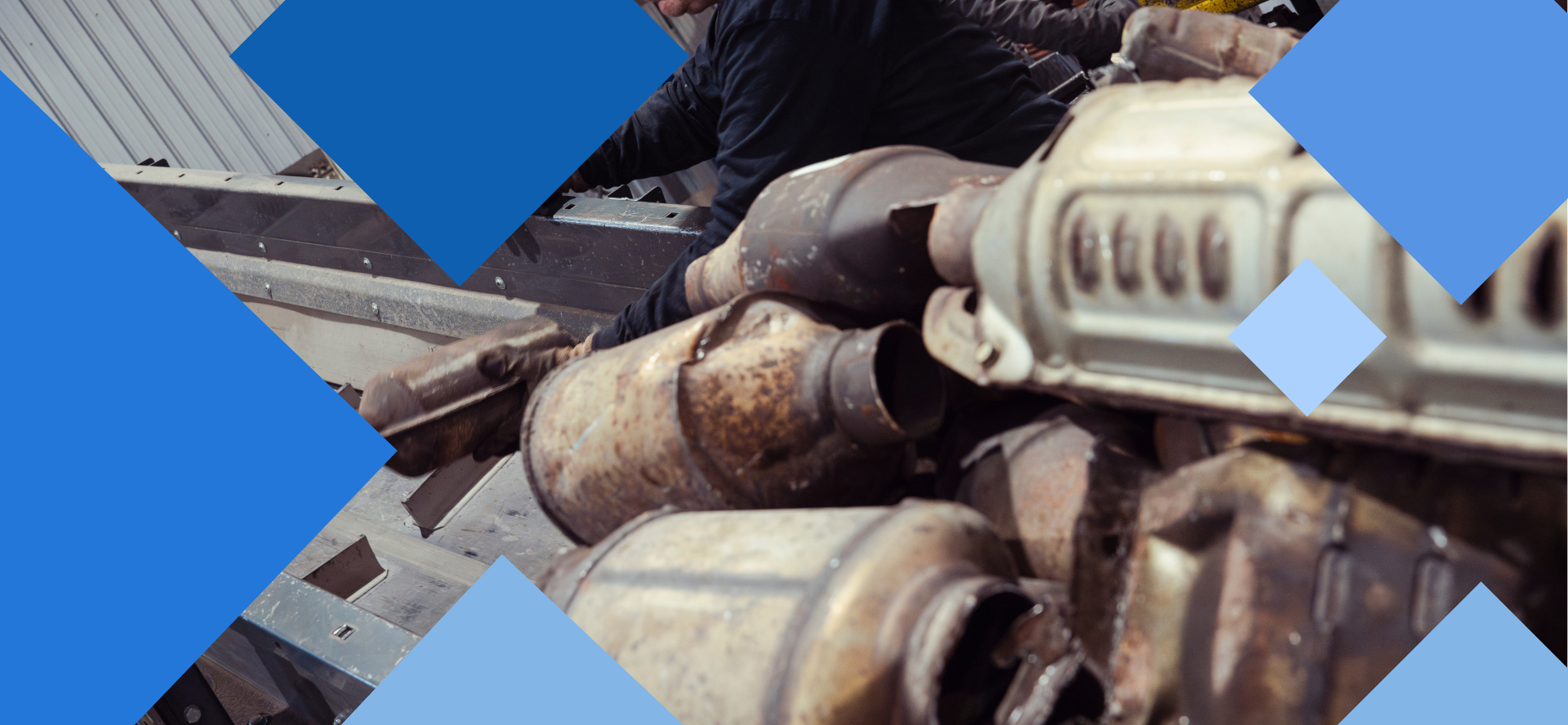
Few car parts are as critical and as widely misunderstood as the catalytic converter. It sits quietly beneath the vehicle, connected to the exhaust pipe and exposed to the heat of the exhaust system.
It may be subtle but this component of your vehicle is an essential piece to your internal combustion engine.
As regulations tighten, air pollution concerns rise, and catalytic converter theft continues to surge across North America, understanding how catalytic converters work has never been more important.
Beyond environmental necessity, catalytic converters have also become economically significant. They contain precious metals like platinum, palladium, and rhodium, which make them a major focus in the recycling and automotive sectors.
But how do converters function and what is their internal anatomy and core chemical reactions? We created this easy-to-understand guide that sheds a light on catalytic converters, what they’re made of, why they matter, and how recycling and compliance play a key role in today’s automotive landscape.
What is a catalytic converter?
A catalytic converter is an emissions-control device installed in the exhaust system of a vehicle. Its primary purpose is to convert pollutants in the engine’s exhaust gases — carbon monoxide, hydrocarbons, and nitrogen oxides (NOx) — into far less harmful emissions like carbon dioxide, water vapor, and nitrogen gas. These transformations occur through redox (reduction and oxidation) reactions triggered by the converter’s precious metal catalysts.
Role in the exhaust system
The catalytic converter sits between the engine and the muffler, connected directly to the exhaust pipe.
As exhaust gases exit the internal combustion engine at extremely high temperatures, they pass through the converter’s honeycomb structure, where chemical reactions transform harmful compounds before they reach the open air.
Without this device, vehicles would release dangerously high levels of air pollution, contributing to smog, respiratory illness, and environmental degradation.
Harmful emissions vehicles produce
The three key pollutants controlled by catalytic converters include:
- Carbon Monoxide (CO): A toxic gas formed by incomplete combustion.
- Hydrocarbons (HC): Unburned fuel that contributes to ground-level smog.
- Nitrogen Oxides (NOx): Including nitrogen dioxide and nitrogen oxide, which form smog and acid rain.
A converter’s purpose is to reduce these emissions, supporting both public health and vehicle compliance.
Historical context
Catalytic converters became mandatory for U.S. automakers in the mid-1970s following the Environmental Protection Agency (EPA) regulations established under the Clean Air Act.
Rising public concern about smog, especially in states like California, forced significant changes in the automotive industry. Today, every gasoline vehicle is equipped with a catalytic converter, and regulatory pressure continues to influence how automakers design exhaust systems, fuel mixtures, and emissions-control technologies.
Which precious metals are found in catalytic converters, and why do they matter?
Catalytic converters depend on a combination of platinum group metals (PGMs): platinum, palladium, and rhodium. These precious metals are selected for their ability to withstand extreme conditions and accelerate chemical reactions inside the converter.
Why each metal is used
- Platinum: Performs both oxidation and reduction reactions.
- Palladium: Excellent for oxidation reactions, particularly converting hydrocarbons.
- Rhodium: The most valuable PGM and the only effective catalyst for NOx reduction.
How metal loads differ among converters
Not all converters contain the same amount of precious metals. Differences depend on:
OEM converters
- Made by the Original Equipment Manufacturer.
- Contain the highest PGM loadings.
- Offer superior emissions performance and longer lifespan.
Aftermarket converters
- Designed for replacement when the OEM converter fails.
- Lower metal loadings due to affordability requirements.
- Reduced recycling value and often reduced performance.
Diesel vs. gasoline converters
- Diesel converters rely more heavily on oxidation catalysts.
- Gasoline converters require three-way converters to treat NOx.
Large vs. small engines
Larger engines produce more emissions, requiring larger or more heavily loaded converters.
Market prices and converter valuations
The value of scrap catalytic converters largely depends on market fluctuations of these metals. Because global PGM mines face supply constraints and geopolitical instability, prices can rise and fall rapidly. During periods of elevated value, especially for rhodium, converters become prime targets for catalytic converter theft.
Why these metals matter to recyclers
Precious metals are expensive to mine and rare. Recycling catalytic converters helps maintain a sustainable supply of PGMs for automotive, chemical, electronics, and industrial applications.
Internal anatomy of a catalytic converter
Let’s peel away the layers of a catalytic converter to understand what’s inside and explain why they’re so effective and valuable.
Outer shell / housing
A converter’s exterior is a heat-resistant stainless steel casing welded into the exhaust system. Its purpose is to withstand extreme temperatures and protect the internal components.
Substrate
The heart of the converter is the substrate, often called the “brick.” It’s typically ceramic or metallic and shaped like a honeycomb structure to maximize surface area. Higher surface area allows more catalytic reactions to occur at the same time, improving efficiency.
Metallic converters are different. Their “brick” is shaped like a spiral swirl.
Washcoat layer
The substrate is coated with a washcoat of aluminum oxide, cerium, and zirconium. This layer further increases surface area and helps disperse the catalyst metals evenly.
Catalyst layer
This is where platinum, palladium, and rhodium are embedded. These metals make the converter function but also make it valuable.
Converter designs
Two-Way Converters
- Used in early vehicles and still in some diesel engines.
- Convert carbon monoxide and hydrocarbons.
Three-Way Converters
- Standard in gasoline vehicles.
- Convert CO, HC, and NOx simultaneously.
What does a catalytic converter do for a car?
First and foremost, catalytic converters reduce vehicle emissions. But their benefits extend beyond environmental impacts.
Emissions reduction
By converting harmful compounds into safer gases, converters ensure the vehicle meets state and federal emissions standards.
Engine performance
A properly functioning converter keeps exhaust gases flowing efficiently. A clogged or failing converter can cause:
- Reduced engine performance
- Poor acceleration
- Overheating
- Increased fuel consumption
What happens when a converter fails?
If the honeycomb melts or becomes blocked, harmful emissions increase and the vehicle may fail inspection. Installing an aftermarket converter is common, but OEM units remain the gold standard for performance and longevity.
The chemistry inside: what chemical reactions happen in a catalytic converter?
Under your vehicle is a small chemical laboratory. It uses extreme heat and precious metals to trigger reactions that clean the exhaust. Let’s take a deeper look at those reactions.
Oxidation reactions
These reactions convert toxic gases into safer compounds.
- Carbon monoxide → carbon dioxide
CO + O₂ → CO₂ - Hydrocarbons → water vapor + carbon dioxide
HC + O₂ → H₂O + CO₂
Reduction reactions
These reactions target nitrogen oxides.
- NOx → nitrogen gas + oxygen
NOx → N₂ + O₂
This breakdown lowers harmful emissions before they reach the atmosphere.
Optimal conditions
Converters function best at high temperatures, usually between 400°C and 800°C. The oxygen sensor helps regulate the air-fuel mixture, optimizing conditions for catalytic reactions.
OEM vs. aftermarket converters
We talked about the basic differences between OEM and aftermarket catalytic converters, but why are they different? And how are they valued in the recycling industry?
What OEM means
Original Equipment Manufacturer (OEM) converters are installed at the factory on a new car. They meet strict emissions standards and contain high precious-metal loadings.
Structural and chemical differences
OEM units often use thicker substrates, higher-quality metal washcoats, and precise engineering optimized for specific engines.
Precious metal loading
OEM converters contain significantly more platinum, palladium, and rhodium, increasing both efficiency and recycling value.
Why aftermarket units have lower value
Aftermarket converters are designed to be affordable replacements. They contain far less precious metal, making them less effective in both emissions reduction and recycling payout.
What are Federal / EPA-compliant catalytic converters?
New catalytic converters and replacements sold in the U.S must meet federal Environmental Protection Agency (EPA) standards. Let’s take a quick look at the difference between EPA and CARB standards, and what their requirements are.
EPA vs. CARB
- EPA-Compliant Converters: Legal across most U.S states.
- CARB-Compliant Converters: Required in California, New York, and a few others. These are held to stricter emissions limits.
Requirements
Both categories must include:
- Visible labeling
- Serial numbers
- Installation documentation
- Warranties
Why regulatory compliance matters
Non-compliant converters may not adequately reduce harmful emissions, potentially causing legal issues and vehicle performance problems.
So why are catalytic converters so valuable?
The value of a catalytic converter goes beyond eco-friendly solutions. It’s directly tied to the global need for the precious metals they contain, along with the rise of stricter emissions standards.
Demand for PGMs
Global patterns show us that PGMs are part of a greater flow in the supply chain. Because mining them is so expensive and labor-intensive, recycling PGMS has become the standard solution. The industries that depend on precious metals are:
- Automotive manufacturing
- Jewelry
- Chemical production
- Electronics
- Glass manufacturing
Demand patterns (2024)
- Platinum: 84% autocatalysts, 7% electronics, 5% chemical
- Palladium: 42% autocatalyst, 26% jewelry, 8% chemical
- Rhodium: 89% autocatalyst, 6% chemical, 2% glass
How catalytic converter recycling works
No matter where your converters come from (scrap yards, automotive auctions), they’ll eventually end up at a toll-refiner. That’s where the process of recycling the precious metals inside begins. Let’s take a deeper dive into the toll-refining process.
Toll refining
Toll refining allows businesses to recover the actual platinum, palladium, and rhodium content from their converters. This method offers transparency and higher returns.
Collection
Converters are gathered from scrapyards, muffler shops, and automotive recyclers.
Grading
Professional graders classify converters based on material type (OEM, aftermarket, DPF, Bead, foil).
Cutting, decanning, and crushing
With specialized machinery, processors cut away excess pipes, open the metal shields, and extract the ceramic inside. That’s where they’ll crush and commingle your catalyst material until it’s a fine, homogenous powder.
Sampling and assaying
Sampling ensures accurate valuation. That’s why processors will take multiple samples. Then, they’ll test them using XRF and ICP devices to determine the exact amount of platinum, palladium, and rhodium contained in your entire converter lot.
You’ll get your assay results; a proven scientific analysis that determines your precious metal content and allows you to get paid for every ounce.
Your place in catalytic converter recycling
Whether you’re a scrap metal or automotive recycler, you play a vital role in returning platinum, palladium, and rhodium to the industries that depend on them. That’s why it’s important for you to work with a partner that has your best interest at heart.
Working directly with a toll-refiner, like PMR, will ensure you get paid for the true value of your material. This way, you’ll maximize your profits, grow your business, and continue to contribute to the global supply chain.
What’s important to remember is that not all toll-refiners are built the same. PMR, for example, offers more than just the refining process. We offer innovative pricing tools that give you real-time market values and that meet the unique needs of your business. Also, we offer hedging opportunities that conform to your business’s specific financial requirements, so you can continue to evolve as the market shifts.
Get in touch with a PMR specialist today to learn how much precious metal your converters contain, and how a trusted recycling partner can help you get the most out of every load.